Kulturforum Now!
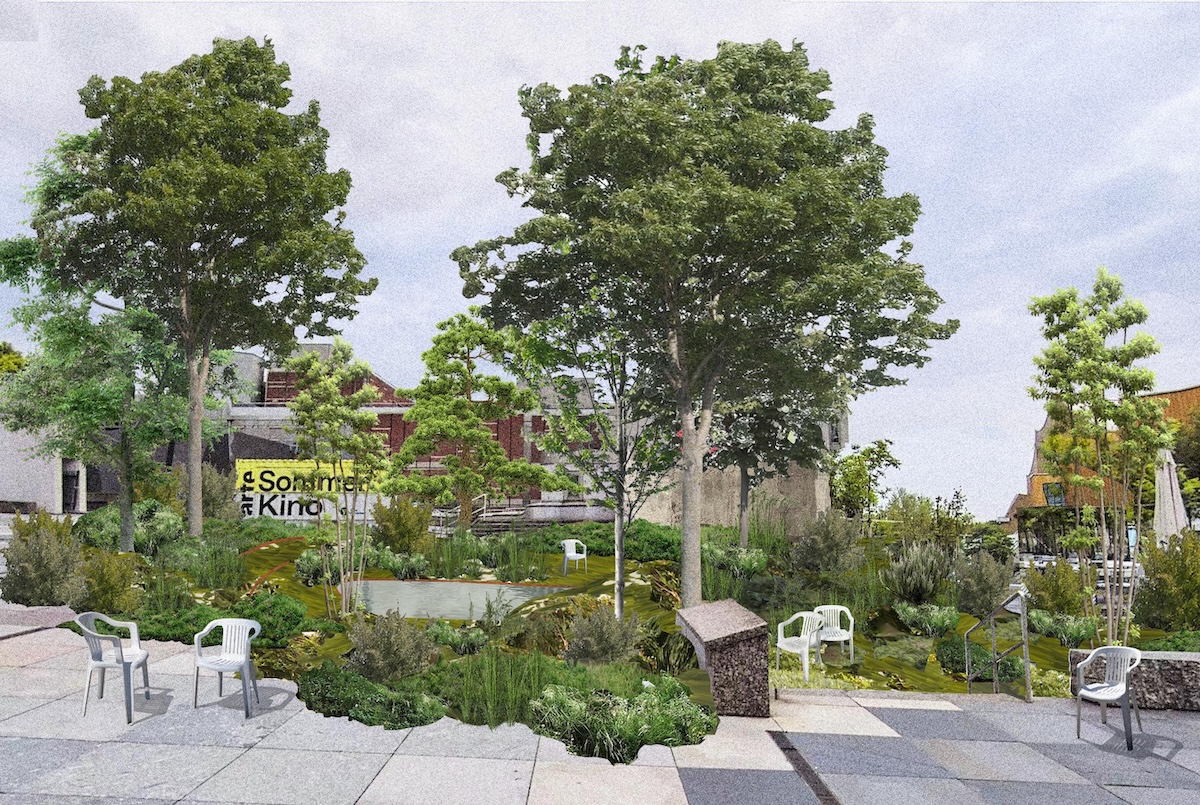
The exhibition presents ten positions by architecture students at Berlin University of the Arts with new interpretations of previously undesigned spaces at the Kulturforum. The projects show how architectural and landscape interventions can connect the area into a coherent, vibrant urban space.
The Kulturforum Berlin is a unique cultural location. During the division of Berlin, it was built as West Berlin's “Museum Island” in the spirit of Hans Scharoun's flowing landscape, but today it appears as an ensemble of strong solitaires in a sparsely populated urban space. It is precisely these spaces that hold great, as yet largely untapped potential: as connecting elements, as spaces of possibility for urban life, as places to linger and meet.
At the same time, this location boasts a rare density and diversity of cultural institutions, museums, libraries, research facilities, and a concert hall of international standing. The buildings themselves are an expression of this wealth, designed by influential architects such as Hans Scharoun, Ludwig Mies van der Rohe, Rolf Gutbrod, and Hilmer & Sattler, recently complemented by the emerging “berlin modern” based on plans by Herzog & de Meuron. The spectrum of visual arts, literature, and music to fashion, design, and architecture converges into a cultural field that is comparable to only a few other places in the world.
The Kulturforum Berlin is set to remain a place of ideas in the future, a space where urban coexistence, living, and design can be conceived and experienced in the spaces in between. For students at Berlin University of the Arts, the Kulturforum is an inspiring piece of city history that inspires them to develop visions of coexistence and urbanity. During the 2025 summer semester, the master's studios of Prof. Bettina Götz and atelier le balto examined the urban and landscape context and developed perspectives for a new interplay between the solitary structures. The resulting visions open up perspectives on possible futures for the Kulturforum and illustrate how diversely this place can be reimagined.
The exhibition is intended as an impetus: it invites visitors to reflect on the open questions, potential, and challenges of the Kulturforum and to think together about how this special place could be further developed.